Water Filtration Systems in St. George, UT
St. George's tap water is safe to drink, but with TDS levels exceeding 400 ppm, it is some of the hardest and most mineral-heavy water in Utah. Red Rock Plumbing installs whole-house and under-sink water filtration systems that remove contaminants, improve taste, and protect your family's health.
Water Filtration Systems in Utah County
Our St. George-based company also provides this service in Utah County. Call with your city and address to confirm the work and scheduling. Emergency dispatch depends on current availability; Southern Utah response times do not apply to Utah County.
15+
Years Experience
5.0
Star Rating
24/7
Emergency Service
100%
Satisfaction Guarantee
Water Filtration Systems in St. George, UT
If you have lived in St. George or anywhere in Southern Utah for more than a week, you already know the water tastes different. The white residue on your faucets, the spots on your glass shower doors, the chalky buildup on your pot after boiling water — these are all visible signs of what is in your tap water. St. George's municipal water supply regularly tests above 400 parts per million (ppm) of total dissolved solids (TDS), making it among the hardest and most mineral-concentrated water in the state of Utah.
While the water meets EPA safety standards, high TDS levels mean your water contains elevated concentrations of calcium, magnesium, chlorine, and other dissolved minerals and chemicals that affect taste, odor, and the long-term health of your plumbing system. A water filtration system addresses what water treatment alone does not — removing or reducing these contaminants at the point where your family actually uses the water.
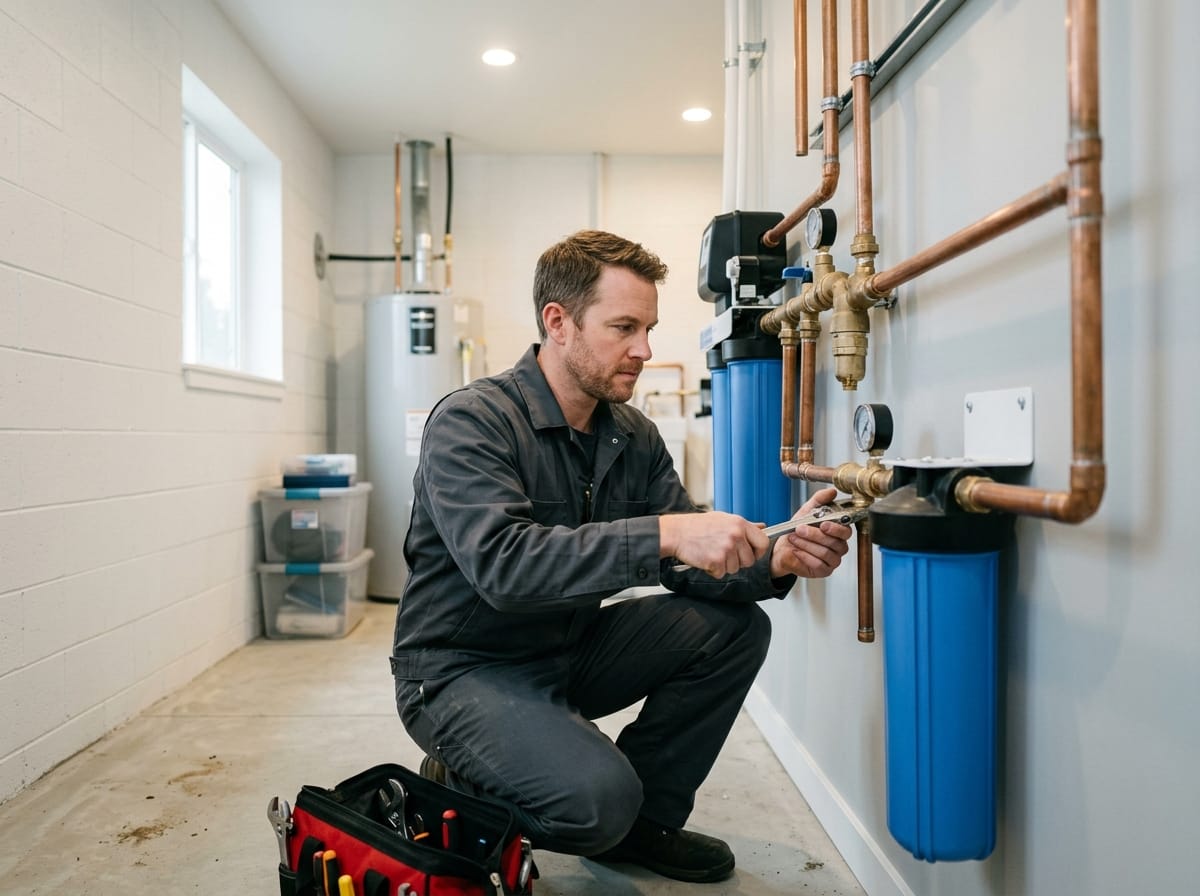
Red Rock Plumbing & Drain Cleaning installs whole-house water filtration systems, under-sink reverse osmosis units, and specialized filters for specific contaminant concerns. We test your water, explain what is in it, and recommend the right filtration solution for your home. Call (435) 215-7553 for a free consultation.
Don't Ignore the Signs
Warning Signs You Need Water Filtration Systems
Don’t wait until a small problem becomes a big one. Watch for these signs in your St. George home.
Bad Taste or Odor
Chlorine taste, metallic flavor, or sulfur-like odor in your tap water indicates contaminants that a filtration system can effectively remove.
Cloudy or Discolored Water
Water that appears cloudy, yellowish, or has visible particles contains sediment or dissolved minerals that are not being adequately treated.
Skin or Hair Issues After Showering
Dry skin, itchy scalp, or dull hair after showering is often caused by chlorine and hard minerals in unfiltered water — especially common in Southern Utah.
White Scale on Everything
Heavy white deposits on faucets, showerheads, glass doors, and dishes are visible proof of St. George's 400+ ppm hard water that filtration and softening can address.
Health Concerns About Water Quality
If anyone in your household has a compromised immune system, is pregnant, or has young children, filtered water provides an extra layer of protection beyond municipal treatment.
Buying Bottled Water Regularly
If your family buys bottled water because the tap water does not taste good, a filtration system pays for itself quickly while eliminating plastic waste.
Water Filtration vs. Water Softeners: Understanding the Difference
One of the most common questions we hear is whether a water softener is the same as a water filter. The short answer is no — they solve different problems, and many Southern Utah homes benefit from having both.
A water softener removes hardness minerals — primarily calcium and magnesium — by exchanging them for sodium or potassium ions through an ion exchange process. This reduces scale buildup in pipes, water heaters, and fixtures, and makes soap lather better. A softener is essential in St. George, and we install those too (see our [water softeners](/services/water-softeners) page). However, a softener does not remove chlorine, sediment, volatile organic compounds (VOCs), heavy metals, or other contaminants that affect taste and health.
A water filtration system uses physical or chemical filtration media — such as activated carbon, reverse osmosis membranes, sediment filters, or UV light — to remove a much wider range of contaminants. Depending on the type of filter, it can remove chlorine and chloramine (which cause taste and odor issues), sediment and particulate matter, lead and heavy metals, pesticides and herbicides, and bacteria or microorganisms.
For most St. George homes, we recommend a water softener to protect your plumbing and appliances from hard water scale, paired with a filtration system to improve the quality of your drinking and cooking water. This combination gives you the best of both worlds — protected plumbing and great-tasting, clean water from every tap.
Types of Water Filtration Systems
We install several types of water filtration systems, each designed for different needs and budgets. Our plumbers will test your water and recommend the system that makes the most sense for your home's specific water quality profile.
- Whole-House Carbon Filtration — Installed where the main water line enters your home, a carbon filter removes chlorine, sediment, and many organic chemicals from every tap, shower, and appliance in the house. Improves taste and odor throughout the home and reduces chlorine exposure during showers.
- Under-Sink Reverse Osmosis (RO) — A multi-stage system installed at your kitchen sink that pushes water through a semipermeable membrane, removing up to 99% of dissolved solids, heavy metals, fluoride, and contaminants. Produces the cleanest possible drinking water from a dedicated faucet.
- Sediment Filtration — Removes sand, silt, rust, and particulate matter from your water. Often used as a pre-filter in combination with other systems. Important in Southern Utah, where seasonal changes in the water supply can introduce higher sediment levels.
- UV Water Purification — Ultraviolet light kills bacteria, viruses, and microorganisms without adding chemicals. Used in combination with other filters for homes on well water or where biological contamination is a concern.
- Multi-Stage Whole-House Systems — Combines sediment filtration, carbon filtration, and additional treatment stages in a single system for comprehensive whole-house water treatment.
What's Actually in St. George's Water?
The Washington County Water Conservancy District and the City of St. George publish annual water quality reports that show what is in the municipal water supply. While the water meets all federal and state safety standards, the levels of certain minerals and chemicals are notably high compared to national averages.
Total dissolved solids (TDS) in St. George's water regularly measure above 400 ppm — the EPA recommends levels below 500 ppm as an upper limit. Calcium and magnesium contribute to the extreme hardness that creates scale buildup. Chlorine is added during treatment to kill bacteria, but it gives the water a chemical taste and can irritate sensitive skin during showers. Trace amounts of other substances — including nitrates from agricultural runoff and naturally occurring arsenic from the region's geology — are present in measurable quantities, though within legal limits.
A water filtration system gives you control over what stays in your water and what gets removed. Whether your concern is taste, health, scale protection, or all three, there is a filtration solution that fits your needs and budget. Our plumbers can test your water and show you exactly what a filter will remove.
How It Works
Simple, Transparent Service
From the first call to the finished repair, we keep it straightforward. No runaround, no hidden fees.
Water Testing
We test your home's water to measure TDS, hardness, chlorine, and other contaminants — so we know exactly what needs to be filtered.
System Recommendation
Based on your water test results, household size, and concerns, we recommend the right filtration system and provide upfront pricing.
Professional Installation
Our licensed plumber installs the system — whether whole-house or under-sink — with proper connections, bypass valves, and initial filter setup.
Testing & Filter Schedule
We test the filtered water to verify contaminant reduction, show you how the system works, and set up a filter replacement schedule.
Options
Water Filtration Systems Options
Choose the right option for your home and budget. Our plumbers will help you decide.
Under-Sink Reverse Osmosis
Multi-stage reverse osmosis system for your kitchen sink — removes up to 99% of dissolved solids and contaminants for the cleanest possible drinking water.
- 4-5 stage filtration process
- Dedicated drinking water faucet
- Removes chlorine, lead, fluoride, and TDS
- Tank stores 2-3 gallons of filtered water
- Filter replacement every 6-12 months
Whole-House Carbon Filtration
Installed on your main water line to remove chlorine, sediment, and organic chemicals from every tap, shower, and appliance in your home.
- Treats every water source in the home
- Removes chlorine taste and odor
- Reduces sediment and particulate matter
- Improves shower water quality
- Low maintenance — filter changes annually
- Pairs perfectly with a water softener
Multi-Stage Whole-House System
Comprehensive filtration combining sediment, carbon, and additional treatment stages for the most thorough whole-house water treatment available.
- Sediment pre-filter stage
- Activated carbon filtration
- Additional treatment stages
- Handles St. George's high TDS levels
- Protects appliances and fixtures
FAQ
Common Questions About Water Filtration Systems
Everything you need to know about water filtration systems in St. George.
How hard is St. George's water?
Very hard. St. George's municipal water regularly tests above 400 parts per million (ppm) total dissolved solids, making it among the hardest water in Utah. The high calcium and magnesium content causes the white scale deposits you see on fixtures, glass, and dishes throughout Southern Utah.
Is a water filter the same as a water softener?
No. A water softener removes hardness minerals (calcium and magnesium) to prevent scale buildup. A water filter removes a broader range of contaminants including chlorine, sediment, heavy metals, and organic chemicals. Most St. George homes benefit from both — a softener to protect plumbing and a filter to improve drinking water quality.
Which water filtration system do you recommend for St. George?
For most St. George homes, we recommend a whole-house carbon filter to remove chlorine from every tap and shower, paired with an under-sink reverse osmosis system for drinking and cooking water. This combination addresses both the taste and health concerns associated with our high-TDS water supply.
How much does a water filtration system cost?
An under-sink reverse osmosis system typically costs $400 to $800 installed. A whole-house carbon filtration system runs $800 to $2,000 installed. Multi-stage whole-house systems range from $2,000 to $4,500. We provide free consultations and estimates to find the right system for your budget.
How often do water filters need to be replaced?
Under-sink RO filters need replacement every 6 to 12 months depending on usage and water quality. The RO membrane itself lasts 2 to 3 years. Whole-house carbon filters are typically replaced annually. In St. George, higher TDS and sediment levels mean filters may need more frequent replacement than in softer water areas.
Will a water filter fix the white spots on my dishes and glass?
Partially. A filter will improve water quality, but the white spots are caused by hardness minerals — calcium and magnesium — which are best addressed by a water softener. For complete spot elimination, you need a softener to remove the hardness minerals. A filter and softener working together provide the best overall water quality.
Is St. George's tap water safe to drink without a filter?
Yes, St. George's municipal water meets all EPA and state safety standards. However, meeting minimum safety standards and having great-tasting, contaminant-free water are two different things. A filtration system removes chlorine, reduces TDS, and provides an extra layer of protection — especially valuable for families with young children or immunocompromised members.
Can you install a filtration system in an existing home?
Absolutely. Both under-sink RO systems and whole-house filtration systems can be retrofitted into any existing home. Under-sink units require minimal space under your kitchen sink. Whole-house systems are installed where the main water line enters your home, usually in the garage or utility room. Installation is straightforward and typically completed in a few hours.
Water Filtration Systems Across Southern Utah
We provide water filtration systems in every community we serve. Click your city to learn more.
More Services
Related Plumbing Services
Ready to Get Started?
Need Water Filtration Systems?
Call Red Rock Plumbing today for a free estimate. Available 24/7 for emergencies.