Water Softeners in St. George, UT
Southern Utah has some of the hardest water in the entire country, damaging your pipes, appliances, and fixtures every day. Red Rock Plumbing installs, repairs, and maintains water softener systems in St. George to protect your home and improve your water quality.
Water Softeners in Utah County
Our St. George-based company also provides this service in Utah County. Call with your city and address to confirm the work and scheduling. Emergency dispatch depends on current availability; Southern Utah response times do not apply to Utah County.
15+
Years Experience
5.0
Star Rating
24/7
Emergency Service
100%
Satisfaction Guarantee
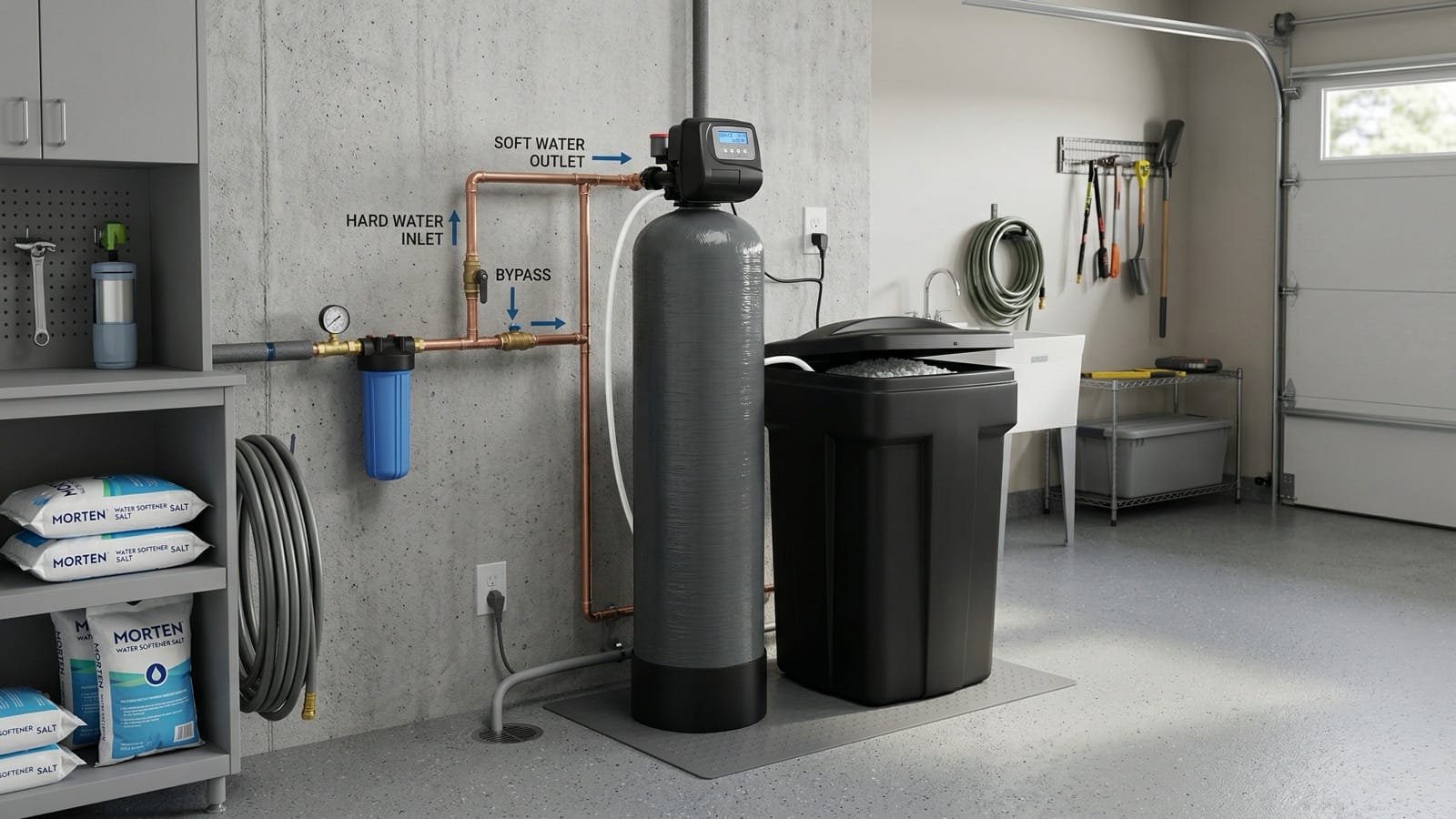
Water Softener Installation & Service in St. George, UT
If you live in St. George or anywhere in Southern Utah, you’re dealing with some of the hardest water in the entire United States. The water supply in Washington County consistently tests above 15 grains per gallon (gpg) of hardness—well into the “very hard” category. That means calcium, magnesium, and other dissolved minerals are flowing through every pipe, fixture, and water-using appliance in your home, leaving scale deposits that cause real damage over time.
Red Rock Plumbing and Drain Cleaning specializes in water softener installation, repair, and maintenance for homes and businesses across St. George, Washington, Hurricane, Ivins, Santa Clara, and all of Southern Utah. As a family and locally owned business, we’ve seen firsthand what our hard water does to plumbing systems—and we know that a properly sized and installed water softener is one of the single best investments a Southern Utah homeowner can make.
Whether you need a new water softener system, your current unit needs repair, or you want a professional water quality test to understand exactly what’s in your water, we’re here to help. Contact us today for a free quote and water hardness assessment.
Don't Ignore the Signs
Warning Signs You Need Water Softeners
Don’t wait until a small problem becomes a big one. Watch for these signs in your St. George home.
White Scale on Fixtures and Showerheads
Crusty white or chalky deposits on faucets, showerheads, and around drains are visible proof that hard water minerals are building up throughout your plumbing.
Spots on Dishes and Glassware
Cloudy glasses, spotted dishes, and filmy residue after running the dishwasher are classic hard water signs—the minerals remain after water evaporates.
Water Heater Running Inefficiently
If your water heater takes longer to heat or your energy bills are rising, sediment from hard water may be insulating the heating element from the water.
Dry, Itchy Skin and Brittle Hair
Hard water strips natural oils from skin and hair, leaving skin dry and itchy and hair dull and difficult to manage—especially noticeable after showering.
Declining Water Pressure Over Time
Gradual loss of water pressure throughout the house often means mineral scale is narrowing the inside diameter of your supply pipes.
Using Excessive Soap and Detergent
If you need more soap, shampoo, or laundry detergent to get a decent lather or clean results, hard water is preventing the soap from working effectively.
How Hard Water Damages Your St. George Home
Hard water isn’t just an inconvenience—it’s actively damaging your home every day. Here’s what Southern Utah’s mineral-heavy water does to your plumbing system and appliances:
**Pipes and supply lines** build up scale on the interior walls over time. This narrows the pipe diameter, reduces water pressure, and eventually leads to clogs and restricted flow. In older homes with galvanized steel or copper pipes, the problem is even worse—minerals accelerate corrosion and shorten pipe life significantly.
**Water heaters** take the hardest hit. As hard water is heated, minerals precipitate out and settle at the bottom of the tank as sediment. This layer of scale acts as insulation between the burner and the water, forcing the unit to work harder, use more energy, and wear out faster. We routinely see water heaters in St. George that fail 3–5 years earlier than they should because of hard water damage.
**Faucets, showerheads, and fixtures** develop white, crusty mineral deposits that clog aerators, reduce flow, corrode finishes, and make your bathroom and kitchen look dirty even when they’re clean. Toilets develop hard water rings, glass shower doors fog with mineral haze, and dishwashers leave spots on every glass.
**Appliances** like dishwashers, washing machines, and ice makers all suffer from hard water. The minerals reduce cleaning effectiveness, fade and stiffen clothes, and build up inside the machines. Studies show that hard water can reduce appliance lifespan by 30–50%.
A water softener stops this damage at the source by removing the minerals before they enter your home’s plumbing system.
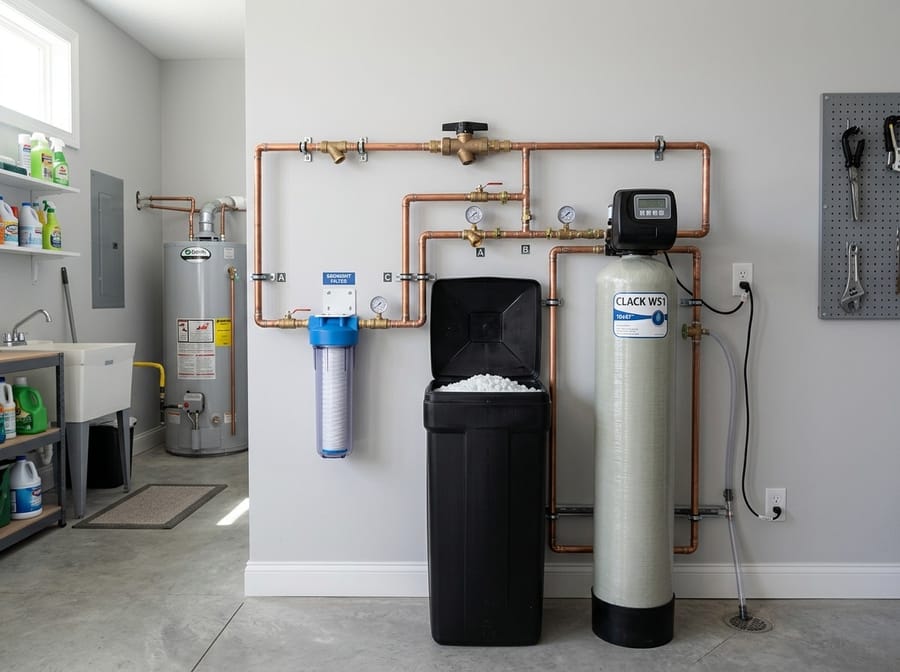
Benefits of a Water Softener System
Installing a water softener in your St. George home delivers immediate, noticeable benefits that improve your daily life and save you money long-term:
- Protect your plumbing — Soft water eliminates scale buildup inside your pipes, maintaining full water pressure and preventing costly repairs
- Extend appliance life — Water heaters, dishwashers, washing machines, and ice makers all last significantly longer without mineral damage
- Reduce energy costs — A water heater free of sediment buildup operates up to 29% more efficiently, lowering your monthly energy bills
- Use less soap and detergent — Soft water lathers better, so you use 50–75% less soap, shampoo, and laundry detergent
- Spot-free dishes and surfaces — No more white spots on glasses, shower doors, or faucets
- Softer skin and healthier hair — Hard water dries out skin and makes hair brittle. Soft water leaves both noticeably softer
- Brighter, softer laundry — Clothes come out softer, retain their color longer, and don’t develop the stiffness that hard water causes
- Less cleaning time — Without mineral deposits, you spend less time scrubbing sinks, tubs, shower doors, and fixtures
Types of Water Softener Systems We Install
Not every home needs the same water treatment solution. We offer several options and help you choose the right one based on your water hardness level, household size, plumbing configuration, and budget:
**Salt-Based Ion Exchange Systems** are the industry standard and the most effective option for Southern Utah’s extremely hard water. They use resin beads to exchange calcium and magnesium ions for sodium ions, producing truly softened water that eliminates scale completely. These systems require periodic salt replenishment (typically once a month) and produce a small amount of brine discharge during regeneration. For homes in St. George with water hardness above 10 gpg—which is nearly everyone—this is the system we recommend most often.
**Salt-Free Water Conditioners** don’t actually remove minerals from the water. Instead, they use Template Assisted Crystallization (TAC) to change the mineral structure so they don’t stick to surfaces. You won’t get the soap-lathering and skin benefits of truly soft water, but you will reduce scale buildup in your pipes and appliances without electricity, salt, or drain connections. These systems work well as a supplemental solution or for homes with moderately hard water.
**Reverse Osmosis (RO) Systems** provide the highest level of water purification, removing not just hardness minerals but also chlorine, fluoride, heavy metals, and other contaminants. We install whole-house RO systems and point-of-use systems (typically under the kitchen sink) for drinking and cooking water. Many St. George homeowners pair a whole-house softener with an RO system under the kitchen sink for the best of both worlds—protected plumbing throughout the home and purified drinking water at the tap.
Water Quality Testing in Southern Utah
Before recommending a water softener, we start with a water quality test. While we know Southern Utah’s water is hard, the exact hardness level varies by neighborhood and water source. Some areas in St. George test at 15 gpg while others are over 25 gpg. Knowing your exact number helps us size the system correctly so it handles your household’s water usage without running out of capacity between regeneration cycles.
Our water quality assessment also checks for other common issues in the local water supply, including chlorine levels, iron content, pH balance, and total dissolved solids (TDS). If we find issues beyond hardness, we can recommend a combination system that addresses everything. The test is quick, straightforward, and included with any softener installation quote.
Water Softener Maintenance & Repair
A water softener isn’t a set-it-and-forget-it appliance. To keep it running efficiently and protect your investment, regular maintenance is important:
**Salt levels** should be checked monthly and refilled when the tank is less than one-third full. We recommend high-purity solar salt or evaporated salt pellets—avoid rock salt, which contains insoluble impurities that can clog the brine tank.
**Annual maintenance** should include inspecting the resin bed, cleaning the brine tank, checking the control valve settings, and verifying that regeneration cycles are working properly. We offer maintenance plans that keep your system running at peak performance year after year.
If your softener has stopped producing soft water, is using too much salt, makes unusual noises during regeneration, or is leaking, call us for a repair visit. Common issues include resin bed depletion (usually after 10–15 years), valve motor failures, and clogged injectors. We service all major brands and can often repair units the same day.
How It Works
Simple, Transparent Service
From the first call to the finished repair, we keep it straightforward. No runaround, no hidden fees.
Water Quality Test
We test your water hardness level and check for other contaminants. This tells us exactly what your water needs and how to size the system correctly.
System Recommendation
Based on your water quality, household size, and plumbing layout, we recommend the right system and provide an upfront, all-inclusive price.
Professional Installation
We install the system at your main water line, connect the drain and overflow, program the control valve, and test everything thoroughly.
Walkthrough & Support
We show you how the system works, when to add salt, and what to expect. We’re always a phone call away if you need maintenance or have questions.
Options
Water Softeners Options
Choose the right option for your home and budget. Our plumbers will help you decide.
Salt-Based Ion Exchange
The gold standard for Southern Utah’s extremely hard water. Removes calcium and magnesium ions completely, producing truly softened water that protects your entire plumbing system.
- Most effective for water above 10 gpg hardness
- Eliminates scale buildup completely
- Improves soap lathering and cleaning
- Extends water heater and appliance life
- Monthly salt replenishment required
Salt-Free Water Conditioner
A maintenance-free alternative that conditions minerals to reduce scale without removing them. No salt, no electricity, no drain connection required.
- No salt or electricity needed
- Reduces scale buildup in pipes
- Zero water waste during operation
- Lower maintenance than salt-based
- Best for moderate hardness levels
Reverse Osmosis Filtration
The highest level of water purification—removes hardness minerals plus chlorine, fluoride, heavy metals, and contaminants for pure drinking water.
- Removes 95-99% of dissolved contaminants
- Whole-house or point-of-use options
- Pure, clean-tasting drinking water
- Pairs perfectly with a whole-house softener
- Low ongoing maintenance cost
FAQ
Common Questions About Water Softeners
Everything you need to know about water softeners in St. George.
How hard is the water in St. George, Utah?
St. George and the surrounding Southern Utah communities have some of the hardest water in the country, consistently testing between 15 and 25+ grains per gallon (gpg). Anything above 10.5 gpg is classified as “very hard.” This level of hardness causes significant scale damage to pipes, fixtures, water heaters, and appliances without treatment.
How much does a water softener cost in St. George?
A quality salt-based water softener installed in a St. George home typically costs between $1,500 and $3,500 depending on the system size, brand, and any additional plumbing work needed. Salt-free conditioners are usually $1,200 to $2,500 installed. We provide free estimates that include the unit, installation, and all connections.
How do I know if my water softener is working?
Signs of a working softener include better soap lather, soft-feeling skin after showering, spot-free dishes, no new scale buildup on fixtures, and stable water pressure. If you notice any of these benefits disappearing—spots returning on dishes, skin feeling dry, or scale forming again—the system may need salt, a resin bed replacement, or a repair.
How often do I need to add salt to my water softener?
Most households in St. George need to add salt every 4–6 weeks, though this varies based on water hardness, household size, and water usage. Check the salt level monthly—keep the tank at least one-third full. We recommend high-purity solar salt or evaporated salt pellets for best results.
Do water softeners waste water?
Salt-based water softeners use a small amount of water during the regeneration cycle—typically 35–65 gallons per cycle, which happens every few days depending on your system. Modern high-efficiency models use significantly less. The water savings from eliminating scale-related problems and reducing soap usage typically offset the regeneration water many times over.
Is softened water safe to drink?
Yes. Softened water is safe for most people. The ion exchange process adds a small amount of sodium—about 12.5 mg per 8-ounce glass for 10 gpg hardness, which is less than a slice of bread. If you’re on a very low-sodium diet, we can install a reverse osmosis system at your kitchen sink that removes the added sodium from your drinking water.
What causes my water softener to make noise?
Clicking sounds and the sound of running water are normal during the regeneration cycle (usually set for 2–3 AM). If you hear loud grinding, continuous running water outside of regeneration, or banging, the system may have a valve issue, motor problem, or clogged injector that needs professional attention.
Can I install a water softener myself?
While DIY installation is possible for experienced homeowners, we recommend professional installation. A water softener needs to be properly connected to your main water line, drain, and overflow—and the control valve must be programmed correctly for your specific water hardness and household size. Improper installation can cause leaks, inadequate softening, or wasted salt and water.
Water Softeners Across Southern Utah
We provide water softeners in every community we serve. Click your city to learn more.
More Services
Related Plumbing Services
Ready to Get Started?
Need Water Softeners?
Call Red Rock Plumbing today for a free estimate. Available 24/7 for emergencies.